A living museum for football boots
Bootsculture
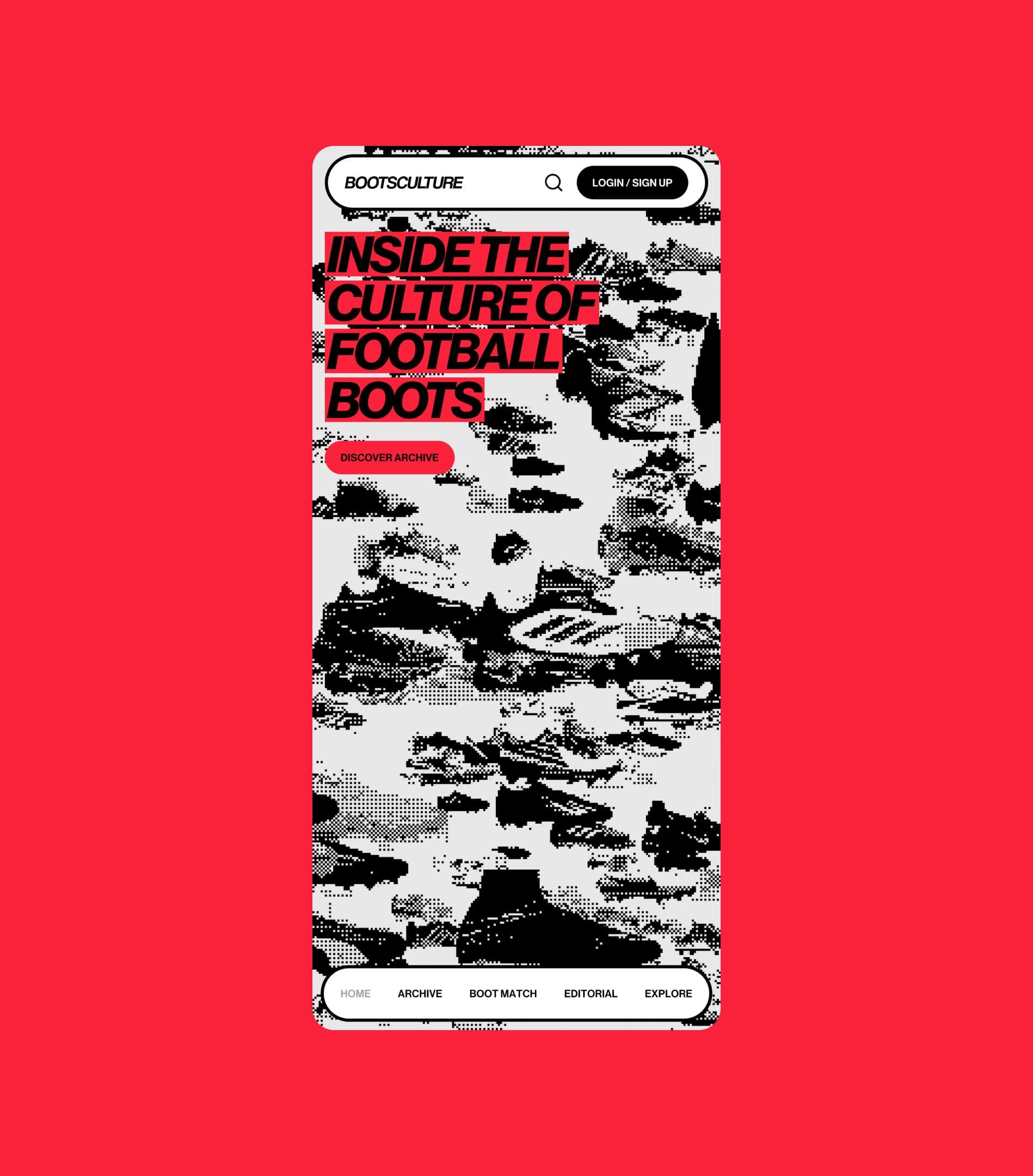
Bootsculture is a platform built for people who don't just wear boots, they remember them. It brings decades of football boots together into one place: an archive that spans generations of silos, colorways and limited editions, and turns it into something you can explore, collect and react to.
But an archive on its own is a spreadsheet with better lighting. What makes Bootsculture culture is everything layered on top: a three-dimensional timeline you navigate like a space, a live pulse of what the community is hyping right now, collectible cards that shimmer like the real thing, and a game of taste where you swipe your way through the catalogue one boot at a time.
We designed it to feel less like a database and more like a museum.
The timeline rests on a lot of quiet preparation the visitor never sees.
Boot imagery is optimised and arranged behind the scenes so the experience loads fast and stays light, you only ever pull in what the years you're exploring actually need, never the whole catalogue at once. When a new boot joins, the system refreshes only the slice that changed instead of rebuilding everything.
For the person browsing, all of that collapses into a single impression: the archive is always complete, always current, and somehow feels weightless even when it's holding hundreds of pieces.
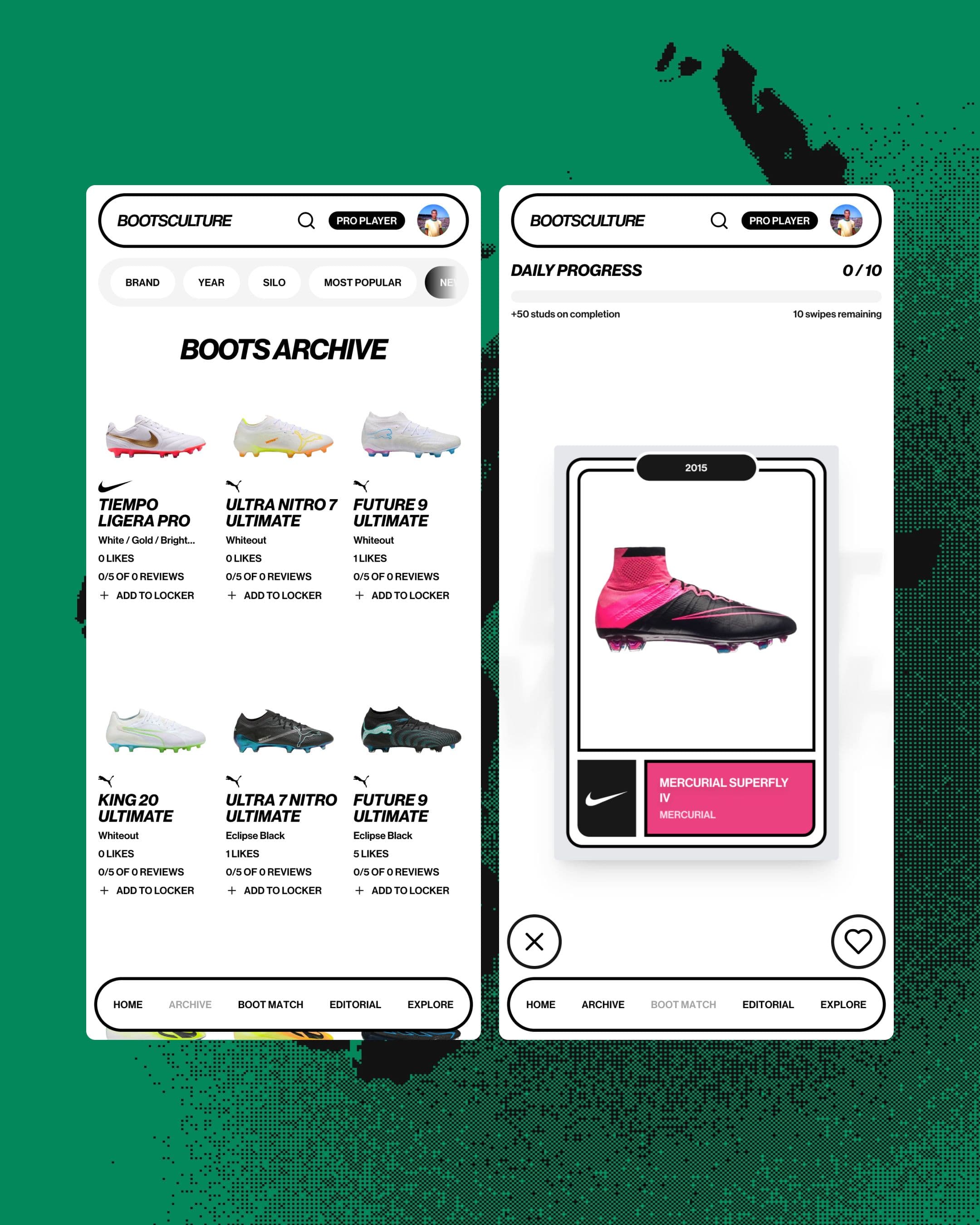

THE BOOT MATCH
Discovery becomes a game everyone already knows how to play: drag right for yes, left for no. The card banks as it follows your hand, the approval indicators fade in as you near the decision, and there's a clear threshold past which the choice is made.
Hesitate and let go too early, and the card snaps back to centre with an elastic bounce, a little "changed your mind?" that hands control back to you. Chosen boots don't just vanish, either: they gather into side piles, one left, one right, giving your decisions a physical, tangible weight.
Everything answers the gesture instantly, the visual reaction always leads the confirmation, so there's never a beat of perceived waiting. A daily limit on picks adds a pinch of scarcity that makes each swipe count for a little more.

THE ARCHIVE
Behind the collection lies an enormous wealth of historical data, gathered over the years in a disordered form: names written in different ways, scattered images, special editions to be identified. The data design work was about turning this chaos into a coherent, navigable archive.
The system recognises and removes duplicates, automatically matches the right images to each boot, cleans up names and accents, and groups pieces into collections (seasonal, limited edition, by brand). Special editions are singled out and given a spotlight of their own.
The guiding principle was robustness: being able to re-run the process every time new data comes in without breaking anything and without creating duplicates. For the end user, all of this translates into an archive that feels curated by hand, piece by piece.